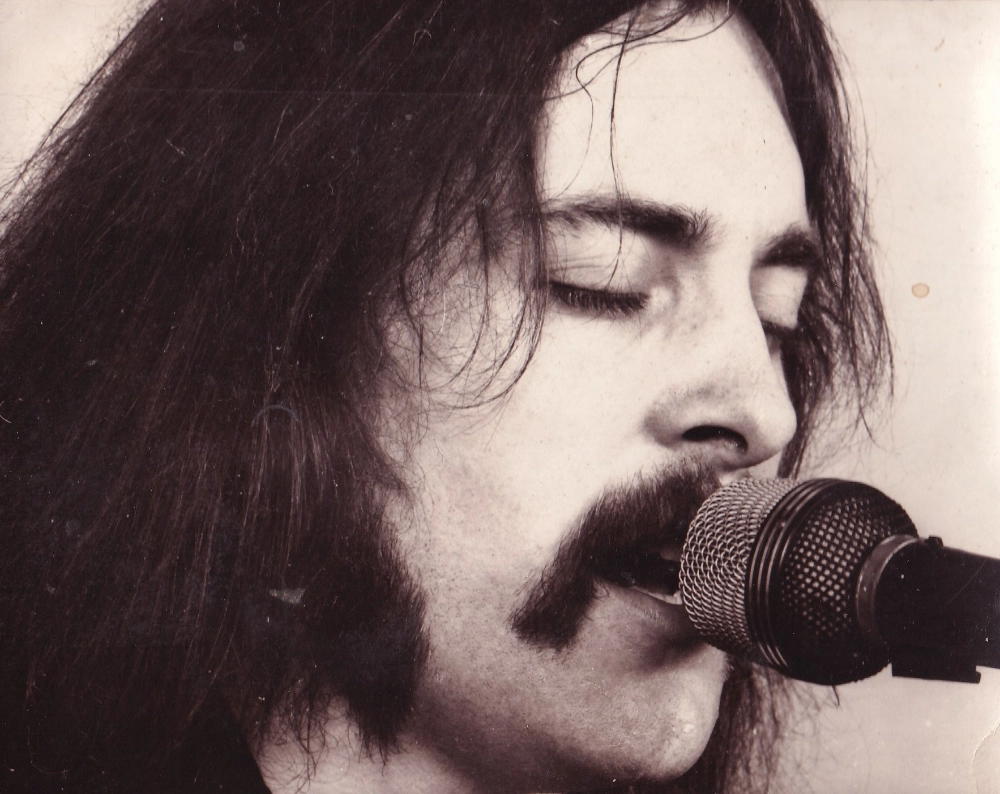
Since Hokus Poke broke up in 1972 there have been very few interviews with group members and so only limited information on the history of the group and its’ members.
However, since the re-release of the Earth Harmony LP on Sommor Records in 2022, there have been a couple of short interviews with Smith Campbell and Jonnie Miles that provide some insights. And the comprehensive liner notes by Richard Allen that accompany the Sommor re-release provide lots of excellent detail.
Clive Blenkhorn, the lead guitarist and main songwriter with Hokus Poke, now lives in Cheltenham. He has never before spoken about his musical career but now, for the very first time, he has been interviewed by his cousin, Chris Blenkhorn.
The interview below provides details of Clive’s musical career and his time in Hokus Poke. He talks about being part of the London music scene in the late 1960s and early 1970s, how Hokus Poke were discovered by Kenny Lynch, and about his experiences of recording the Earth Harmony LP.
Interview
Interview conducted by Chris Blenkhorn, March 2026.
Hello Clive. Thanks for taking the time to answer a few questions about your musical career and your time as a member of Hokus Poke in the 1970s.
Hello Chris. It’s a pleasure to speak to you.
I think you were brought up in rural North Yorkshire. Did you come from a musical family and what are your earliest memories of listening to music?
I come from the Rosedale, on the North Yorks Moors. My mum was a pianist and she played the church and chapel organs in the village. We just listened to music on the radio. Whatever was on at the time? Which was, well, not much, but it was all you could get.
And when did you first start playing the guitar?
I started playing when was 14. I got a Hofner Congress, a lovely little guitar. Like many I learned through the Bert Weedon book ‘Play in a Day’. At that age I guess you are in a learning groove when you are still at school. At 18, I moved to York and played with a couple of bands there – The Chevaurs and The Everblues. They were R&B groups, three- and four-piece groups who played locally around York.
So, you had a musical career in York before you moved to London?
Yes, but it was all covers we played. All covers.
I think a lot of groups were like that in those days, weren’t they?
That’s right. I never I thought of writing anything at that time.
What were the earliest influences as you learned to play the guitar?
Well, before I moved to York we used to listen to the radio. Lonnie Donnegan was very famous at the time and he had a lot to do with it. Also, some American music, but it is hard to remember who they were after all this time. But when I got to York, I got copies of Yardbirds LPs with Eric Clapton and I used to sit and listen to them and learn to play with him. I tried to learn, to play what he was playing and that helped a lot. And watching other bands playing in York, that helped a lot as well. They came from Leeds and from all over. And I asked them ‘How did you do that?’
And what years were you in York, Clive?
I moved to York when I was 18. And I was there from about 1964 or 1965 until 1968 when I moved to London.
You moved to London in 1968. I think. Did you move to London for work? Or was it with the intention of starting a musical career?
Yeah, for music, as there was not much happening in York. I just hoped to be able to do well in London.
And did you play in any other bands in London before you met the members of Hokus Poke?
I did indeed. We called ourselves Black Sabbath. It was the keyboard player’s idea. Well, I didn’t take any notice at the time but there was another band called Black Sabbath. The keyboard player had been to Sheffield University. He got us into there and we supported The Keef Hartley Band, and we also played Keele University and the LSE. All places of learning. So, I played a few of these gigs with them under the name Black Sabbath, but it all fell apart and then came Hokus Poke.
And who were the members of your Black Sabbath band? Do you remember?
Bill Whalley was the drummer, Mike England was the keyboard player, and I think it was Neil Parkinson who played bass. I was on guitar and Mike England did most of the singing. I’m sure those were the names.
Black Sabbath, your first group, didn’t have any connection to Hokus Poke, did they?
No, Black Sabbath was my first London band but it was completely separate from Hokus Poke.
How did you meet the other members of Hokus Poke?
I know that Smith and Jonnie had already played together and Smith ended up living in a flat below us in Shepherd’s Bush. So, I think that’s how we met. Then Jonnie came in through Smith. I don’t know where Roger came in. I just don’t know. Maybe somebody knew somebody who knew him, and they told him about us. And he came along. And that was it.
Where did you practice and where were your 1st gigs?
Well, we practised in different rehearsal rooms mainly in West London. And in the basement of Bob Kerr’s music shop. Bob Kerr had a band called the Whoopie Band and we used to rehearse in his studio in Putney. The places we played a lot were The Greyhound, The Marquee and The Café des Artistes. We did not play a lot of times, but these were the most famous and our favourite ones.
And what instruments did you play at that time – yourself and Roger and Smith?
I played a cherry red Gibson SG Special with black Artec P 90 pickups – mainly because it was quite light and easy to play for long periods. Roger played a Gibson Les Paul Gold Top which was very heavy. Probably he was much stronger than me. Smith played a Fender Precision Bass and Jonnie, I’m sure, had Ludwig drums.
And did you say that Roger had a twin necked guitar? A Les Paul?
Yeah, I think he got it from Jimmy Page. I could be wrong. Yes, it did have twin necks but I don’t think we used it on the recording. do And I don’t think we used it much on gigs. Maybe just once.
And going back to Hokus Poke, how did the group decide upon the name?
Jonnie came up with it, the drummer. We could have gone on all day thinking of a name, but it seemed a good name and so we kept it.
The name wasn’t anything to do with the Focus song, Hocus Pocus, was it?
No, no. I’m sure not. I think somebody said it sounded like hocus pocus but Jonnie never mentioned he got it from there. So, I don’t think so, no.
You mentioned that you played quite a number of gigs at famous London venues of the late 60s and the 70s, including the Marquee and the Greyhound. Which of these were your favourite venues and do you have any specific memories of your time playing there?
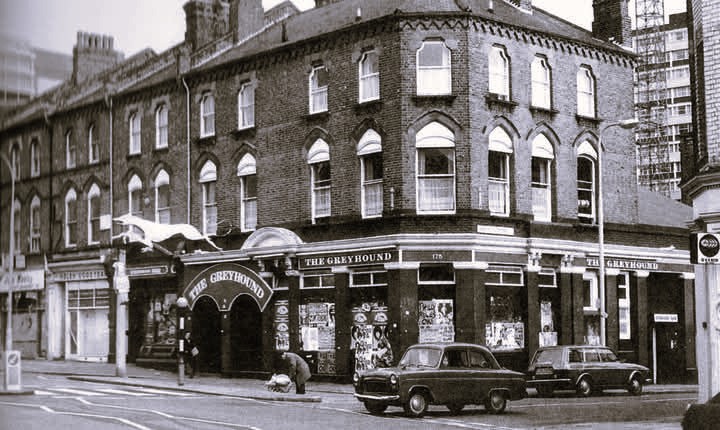
I think we all liked The Greyhound in the Fulham Palace Road about the best. We didn’t get an awful lot of gigs anywhere, but we all liked playing The Greyhound because there were masses of people. It got rammed up the steps, along the top, down the side and round the stage – everywhere. People there to enjoy themselves. And Duncan Fergy, Ferguson, the landlord, was a great bloke as well. So, we loved him. So, the Greyhound would be my favourite, yeah.
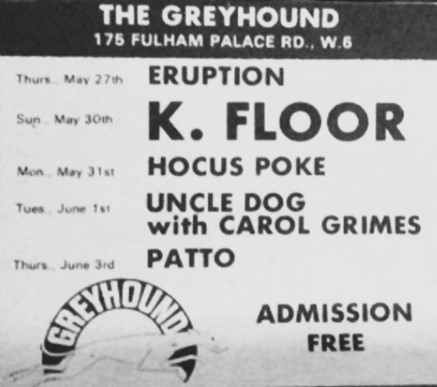
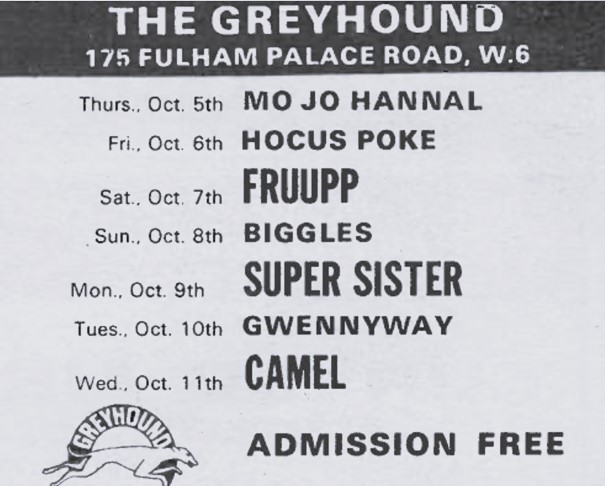
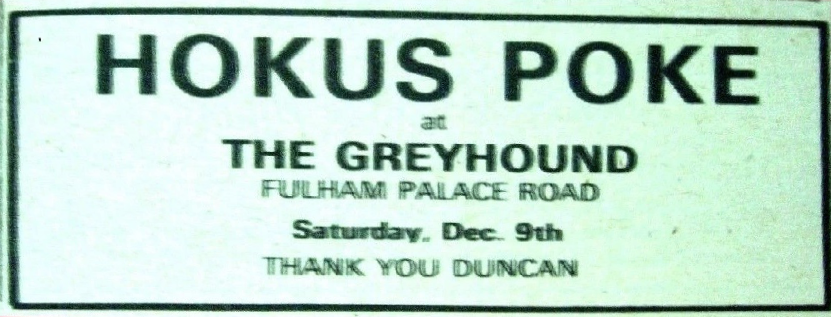
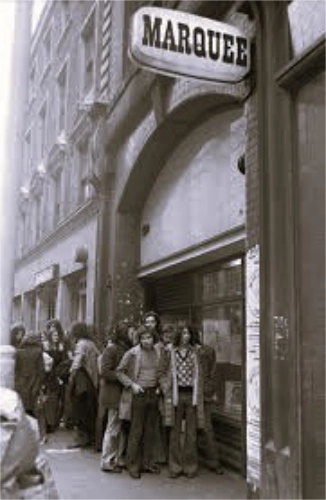
What about the Marquee? That’s probably the most famous venue you played. Do you have any memories?
Yeah, yeah, The Marquee was okay. Enjoyable, yes. But The Greyhound where we played quite a few times just got into our blood. We used to get a great reception from people there. Good, good, good.
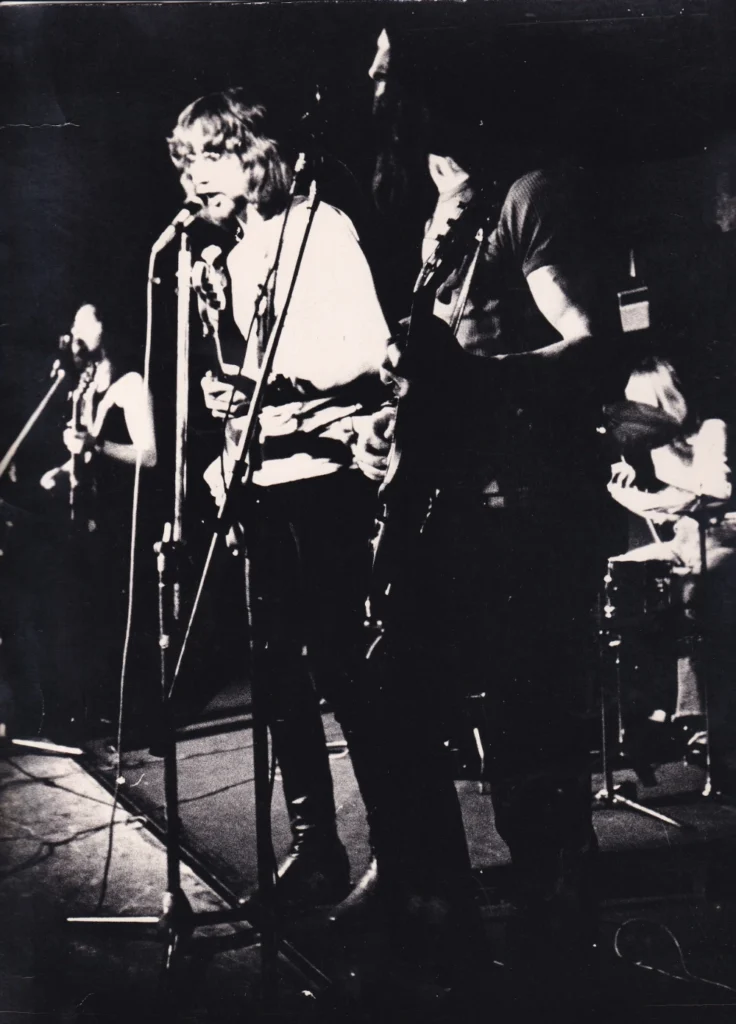
And you must have supported other artists, some of whom became famous. Do you have any memories of other groups that you played with and supported and who impressed you the most?
We didn’t play with the many other people, many other bands. But East of Eden I remember. I think they were the only other group we played with that I remember.
When you played at the Marquee, there weren’t other people on the bill with you?
No.
Obviously, the 1960s and 1970s were a real melting pot for rock and progressive groups in London. Many very famous venues like the Roundhouse and the Rainbow Theatre, and the large universities and colleges all promoting concerts. Do you have any special memories of these larger venues you visited and the artists you saw at that time? Maybe anyone that influenced you?
Well yeah, Jeff Beck. I loved watching Jeff Beck. I saw him in a pub in Seven Sisters and then at Hammersmith. His group included Rod Stewart, Ronnie Wood and Nicky Hopkins at that time. But as far as influence, he was obviously way beyond my talent level. And Cream, Nazareth, John Mayall, Moody Blues, Brian Auger and The Trinity with Julie Driscoll – and lots of people like that. There were loads of bands you could just drop in to see in pubs and places like that. And later Ducks Deluxe, all kinds of bands.
If you saw Cream in those days, you were very lucky?
Yeah, I saw them at, would you believe, Streatham Ice Rink. Seriously, yeah. Wow, wow. Fantastic, fantastic.
Going back to Hokus Poke in in the earliest days, what was a typical set list? Was it originals or still covers?
The set list was all covers. American stuff, pretty much, like Johnny Winter, Mountain and that kind of stuff.
US Rock, yeah?
Well yes, more or less. But if somebody offered me a fortune to give a list of the songs we played I couldn’t. No, it’s so long, it seems so long ago, I’ve forgotten so much. But yeah, we used to get a good sweat on … yeah.
So, you fancied yourself as Leslie West, did you?
No, I did not. Oh, but Roger did. Roger could play. He was a far better player than me.
I think it’s been reported that you were found by Kenny Lynch playing at the Greyhound, which you mentioned earlier. Can you explain how this happened? How did Kenny Lynch find you?
Well, The Greyhound was well known for cheap bands and for up-and-coming bands. I think he just dropped in, hoping to see what we’d got. I think he was looking for bands and that’s probably why he took us on.
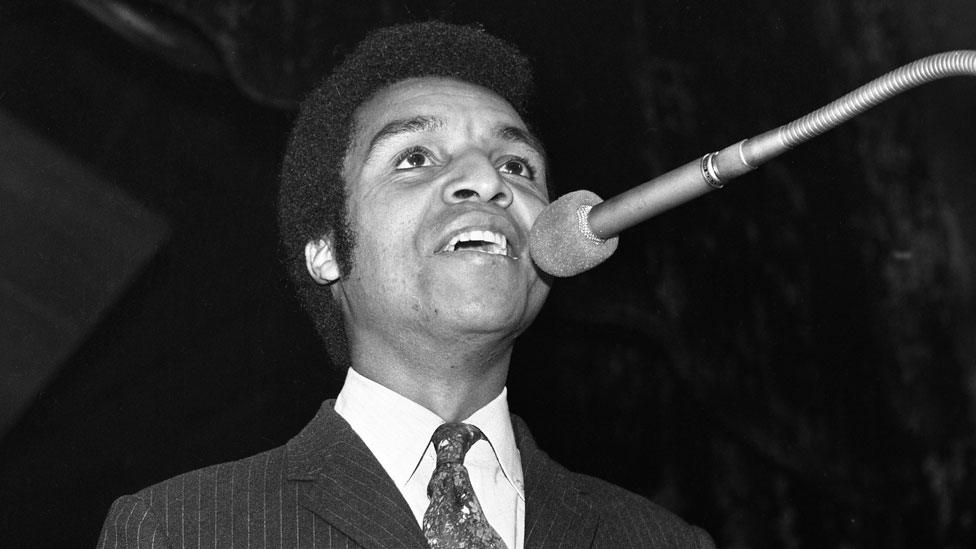
He came in scouting for talent?
It seems that way, yeah.
Kenny Lynch was obviously quite famous at the time for his musical career and for his other ventures. What are your memories of working with and for Kenny?
Well, it’s hard to say. I never really got to know the man. It was all too rushed. But he seemed like a decent bloke. He was a man who got things done, I’d say that. And he got us into the studio, that’s something. But I can’t really say any more. It’s so long ago, I can hardly remember the man to be honest.
It’s reported elsewhere that you spent time at his house in Nettlebed, is that right?
Yes, we did, yeah. Occasionally, in the early days, we’d go up there. He lived just across the field from George Harrison.
Kenny Lynch’s house in Nettlebed was where the photos for the album were taken. Is that correct?
Yes. They were taken there by John Kelly. That’s right.
Kenny arranged for Hokus Poke to be managed by his company, Specs Music. And he arranged the recording contract with Phillips. Is that right?
Right, yes, yes.
There are lots of stories about groups and contracts in the 60s and 70s. Did you get contracts and was the band happy with the contracts?
No, I don’t think any of us signed a contract, no. So, what really happened there, Good Lord only knows, if you pardon my phrase. But yeah, it’s hard to say.
So, if no contracts were signed, it begs the question ‘who owned the intellectual property for the music’?
Smith once said we were all young and foolish at the time. So yes indeed, it does, doesn’t it? That seems to be the way things were back in those days. But as they say, you’ve got to seize the opportunity, don’t you? Yeah? And we tried to, yeah.
And, as a result of the relationship with Kenny, Hokus Poke secured studio time at Air Studios in Regent Street. Is that correct?
Yes. But I think the studios were in Oxford Street at that time. Maybe Oxford Circus.
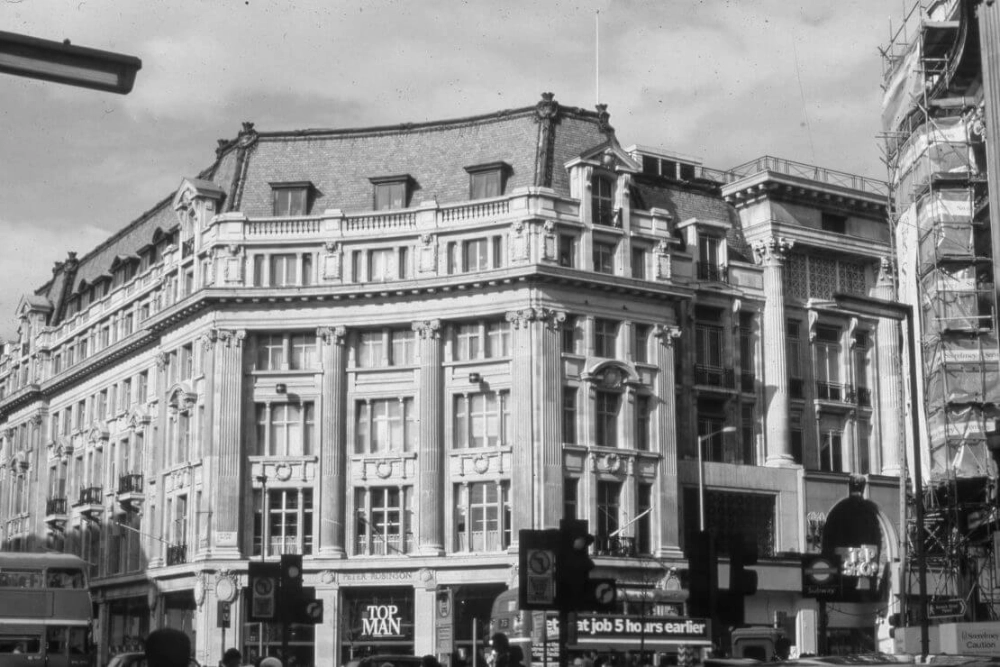
This must have been a memorable experience. What are your memories of your time in the recording studio?
It was a lovely studio. It was the first time we’d been in a really big studio, in fact the first time we’d been in a proper studio. It was great. Lovely. Great gear, good engineers and things. It was the business!!
And when you entered the studio to record the album, were the tracks already part of your live sets and well-rehearsed?
No, they were neither. I don’t have any recollection of playing any of the album tracks live. Maybe one, but that would be the absolute maximum. No, before going into the studio we were just doing covers. So, we played it by ear, we just got in there and got on with it. That’s all I can say. We hadn’t rehearsed the songs; we hadn’t really finished rehearsing them properly at all. If we could have had a few more months before the studio time, we could have re-arranged the songs and Roger and I would have played our guitar parts differently. We could have done this, that and the other. I was still writing some of the words to the songs in the toilets at the studio – which is silly, too silly for words, but there you go. That’s how it was. You had to take your chance when it came along.
So, did you start writing the songs when you had the date to go into the studios?
No, no, no. We had all the songs before we went into the studio, but we hadn’t really rehearsed them and we hadn’t gigged any of them. Right. We never thought we were going into the studio. And when we did get the chance to go, we had no time, not three months’ time, we were in there within days, I think, or maybe a week. There was very little time to sort anything out.
And after you recorded the album, did you play the songs live after that?
No, no. We only did handful of more gigs after the recording and then called it a day because we had no backing, or anything, from the management company or the record company.
So, the songs on the LP weren’t played live before it was recorded and not really afterwards either?
No. No.
You personally wrote many of the songs, indeed the majority of songs that you recorded in the studio. How did you go about that songwriting and what were your influences on the songwriting?
That’s a very good question, I’ve asked myself that. American bands influenced me, the Allman Brothers band and people like that. And the guitar players over there. The songs just seemed to come to me. I distinctly remember one night I said to the lads – Jonnie, Smith and Roger – I’m going to write a bluesy song. And next morning I went and wrote one, Living in Harmony, just out of the blue. I haven’t a clue why I said it, I was not trying to be clever, but it just came. They all just came. If somebody said, ‘What is that song about?’ Well, it just came, right. It’s strange, I can’t understand it. Maybe I just had a little purple patch of writing those songs at that time. I don’t know. That’s all I can say really.
It’s reported that you met George Martin who owned the studios at the time. He was obviously a very famous individual at that time. How did you find him and did he help the group when you were in the studio?
Very nice man. Very encouraging. Yes, he seemed like a very decent sort of person with good advice.
Was he actively involved in the sessions or just on the periphery?
No. He was just there. He had nothing directly to do with the recording sessions.
So, the recording sessions led to the release of your LP Earth Harmony in 1972 on the Vertigo swirl label. At the time of release were you and the band pleased with the music on the LP?
Well, personally I was not pleased with my part. But overall, we played well. Good for the time under the circumstances because it was all so rushed. We only had a week to do the whole recording. As I say, I was still writing some of the words in the toilets while the rest of them were getting on with it. But the beautiful thing is that Roger, Smith, and Jonnie played like troopers. But I felt I let them down because I don’t think I was really ready to do it. If we’d had more time, it could have been much more, the songs could have been opened up and possibly rewritten. Or maybe we could have written one or two more songs if we’d had more time. But it is what it is!
The LP came out with a gatefold sleeve, a die-cut cover and artwork that is very striking. How was the LP conceived? And were you and the group involved in the process?
No, I have no idea how it was conceived, but I know John Kelly was involved. But we all liked it. We thought it was a great cover but I am sure none of us had any input into it. So, where it came from, God alone knows. We didn’t ask. So, I guess the record company must have done it.
Going back to the music on the LP, do you have any favourite tracks?
I like Living in Harmony. And The Poke was okay as well. And maybe one or two more. But those are probably the two that I remember the best. Right.
What about H.P. Boogie? That is my favourite.
I quite like that song too. It’s a very good song to kick off the LP. But I forget without looking at the cover, the LP cover, what some of the songs are called. Well, I’m 80 years old and it was a long time ago. 50 odd years.
Other interviews on the web suggest that, after the LP was released, you got little or no promotion from the record company and your management company. Is that correct and why do you think that was the case?
Yes, perfectly correct. No real promotion whatsoever.
And did they explain why they didn’t put in any effort?
No, I don’t think so. By that time, I think I’d walked away because I felt so disappointed with my performance.
So, did you leave before the record was released then, Clive?
No, no, no, I left after the LP was released. We did a gig or two afterwards. But I don’t recollect any contract or anything, no promotion whatsoever either from Kenny Lynch’s company or from the record company.
So, had Kenny Lynch moved on to other projects at that time?
I have no idea. I don’t think we saw him at all after we’d done the record.
Now, the LP is available on Spotify and YouTube and reviews of the album are all very positive. The reviews suggest a number of possible influences, including Wishbone Ash, I guess because of the group’s dual guitars. Looking back on the time when you were making the LP, did you have any particular influences at the time of writing the songs or recording them?
No, can I say I don’t think I’d even heard of Wishbone at the time. Silly as that might sound. So, no, they were not an influence and I think they were instrumentally much better than us having heard them later. So no, it was nothing to do with Wishbone Ash. As I said, I liked American music mainly. But where any influences came from, I don’t know. I’m sorry.
Earlier you mentioned the Allman Brothers Band, who also had two lead guitarists, one with a Les Paul Gold Top. Were they an influence?
Oh, yes, they were. Good players, great players.
As you look back on it and they were one of your influences, were you trying to sound like them at the time?
No, I don’t think we tried to sound like anyone. Our songs just came. I don’t think we had any clue where from. Not sure of any direct influence but I did like American music. So, The Allman Brothers Band was one, still are one, of my favourites but I think they’re all dead now and had to give up years ago. And Little Feat and Lowell George. But they were too good for me, much too good!
People obviously like the Earth Harmony LP and talk about the strong songs and good playing. I would agree with that. For me, the standouts are the guitar interplay, and I think that’s why people refer to Wishbone Ash, and the very definite changes in pace in many of the songs. You said how you felt about the LP at the time and your reservations, but looking back on it, how do you feel about the LP now?
Well, a lot of people must like it which is good but it could have been so much better. That’s the thing. If we’d had a little bit more time, maybe in the studio and maybe beforehand, before we actually went in to record. We could have looked at those songs. I could have been a lot harder, put bits in here, taking bits out there. You know, I could have rewritten some of it. And also, I do not like my voice, on record anyway. I do not like my voice.
Sounds okay to me!
There you go. Yeah.
Earth Harmony was your first and only LP. Many bands have good first LPs followed by classic second and subsequent LPs. Do you regret that Hokus Poke never had the opportunity to record a second LP?
Well, that’s a hard one to answer. Not really, I suppose, because we were let down and I was a let down on this first one, I think. And for some reason, once the LP was finished, my writing skills just went. I don’t think I’ve written a thing seriously since, which is sad to say. So, the LP was my Magnum Opus, I suppose, if you can call it that. So, the songs just came, and that’s all I had to give.
Going back to the LP on the Vertical swirl label, original copies now sell for between £100 and £750. How do you feel about your LP becoming such a valuable collectable?
That’s an awful lot of money. I wouldn’t pay that for it, but there you go. All I’m interested in now is that people get some enjoyment from it. But that is an awful lot of money to pay for something.
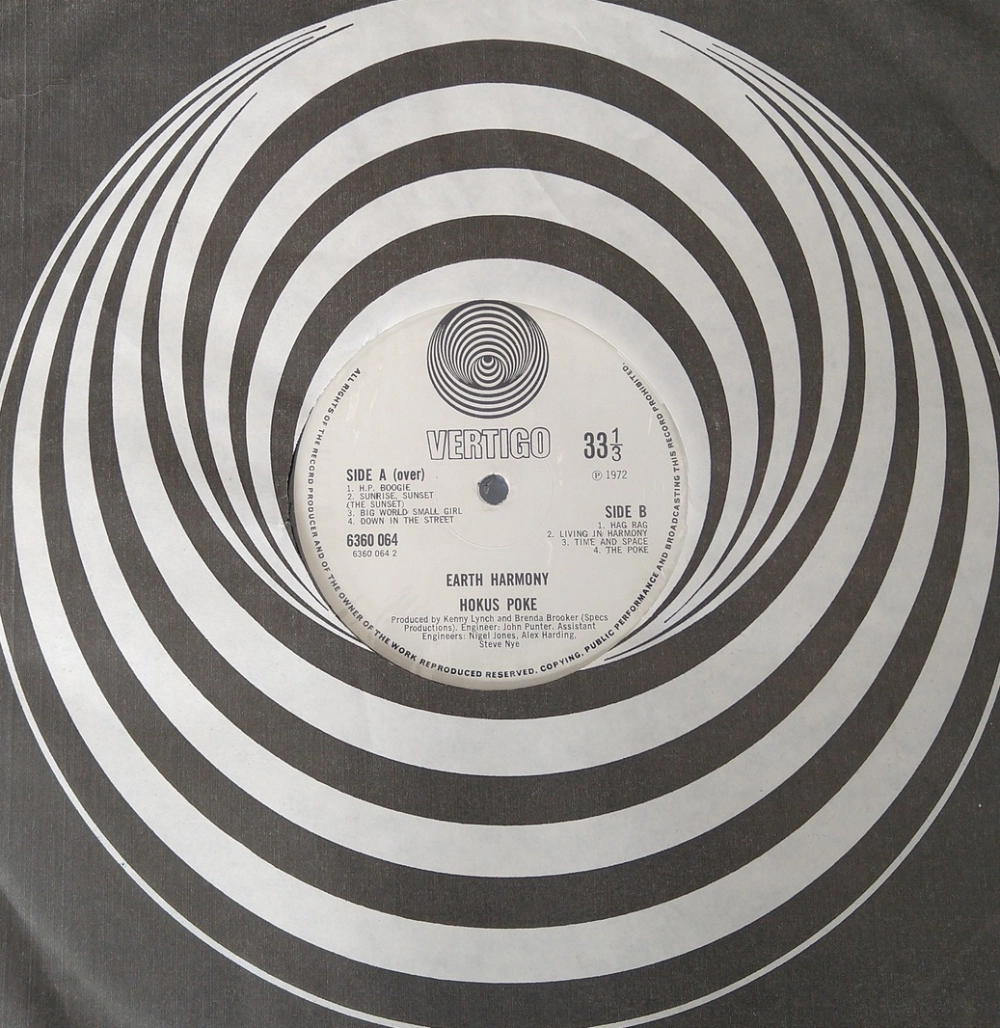
In recent years, Earth Harmony has been released in Germany and Japan on CD and, more recently, on vinyl by Sommor in Spain in 2022. Do you have a copy of the Sommor re-release?
I do. They sent me two copies, yeah. I think Jonnie gave them my contact details. It’s very nice with the original die-cut sleeve and with good liner notes.
Are you in touch with the record company and were you in any way involved with the re-release?
No, not at all. Though, I did phone up the company in Spain to say ‘thank you very much’ for sending me the LPs.
Interviews on the web suggest that Smith and Jonnie didn’t have your contact details. Is that correct?
No, they didn’t know my contact details. Smith didn’t have them, none of them did. But Jonnie found them from somewhere. He was in New York and he phoned me to say that the company in Spain was re-releasing the LP. And then a few weeks later two copies of the LP came in the post. So, they should have my numbers now.
Going back to the 60s and 70s, many groups benefitted from sessions on the radio. Did Hokus Poke ever get the chance to promote the LP, or themselves, on the BBC or any other radio programmes?
Well, I think we did one recording at Maida Vale Studios for The John Peel Show.
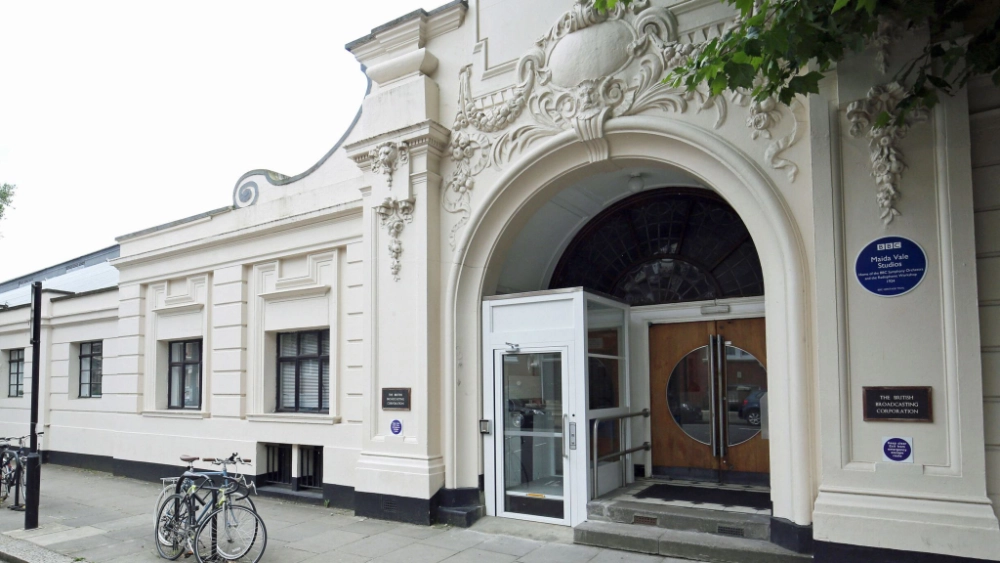
So, that would be Top Gear, I guess, would it?
Yeah, John Peel’s programme in the 60s and early 70s was called Top Gear.
Was the recording ever broadcast, do you know?
Yes, I think I heard it. But it didn’t sound that good. I think I had a cold when we recorded it, and that made it even worse. But yeah, I heard it.
Other interviews suggest that the group broke up quite soon after release of the LP. Is this correct? And what is the story of the breakup?
Yeah. We were going nowhere. We were getting no help whatsoever from our record company. They had ceased to exist as far as we were concerned. And the gigs were sparse. So, we just went our separate ways. We had things to pay for and we had to earn from somewhere.
So, it was a practical decision based on no work and no support?
Yeah. Right.
Did you continue your own musical career after Hokus Poke?
Yes. I played with another band or two, yeah. Here and there.
What were they called? Do you remember?
Will Scally’s band. Can’t remember the name. But Will Scally and Bob Ward were in the band. Right. I played with them for a while. Just rhythm and blues, just covers, straightforward stuff.
And do you have any memories of that time?
Good times. Good, good boys.
So, I believe you moved to Cheltenham around 1980. Is that correct?
That’s right, yeah, yeah.
Did you continue to play and write? And did you play in any groups?
I didn’t write anything. But I played with a band called The Strangers who were a club band playing poppy stuff and standards. And another band called Triangle which was quite a good little band. There were just three of us all singing harmonies, like The Hollies and Bee Gees. All the stuff with harmonies. And then I just got fed up with it and gave up.
So that was starting about 1980. How long were you involved with those bands?
About five or six years is total. So, to the mid-80s yeah.
And then did you hang up your boots, Clive?
Well, one or two people used to come round. Mates. And I’d show them how to play bits and pieces. How to put songs together and things like that. We’d play a bit of Eagles, a bit of this, that, and the other. Just for fun more than anything.
So, it’s now many years since Hokus Poke and the release of the album. I know Roger Clarke and Smith Campbell have died. But wondered, do you keep in touch with Jonnie Miles?
No, I had no number to get in touch with Jonnie and he hasn’t been in touch since. But Roger and Smith, I was sad about their passing. They were all great people. Jonnie was so damn good. And Roger was a great guitarist and Smith was a very good bass player. I was lucky to have those three blokes. Believe me.
Well, thanks for your time, Clive. A very interesting story and I’m so pleased that you’ve agreed to share it with me.